English
 Română
  Русский
1 October 2026
Moldova Tourism Forum 2026
Moldova Tourism Forum 2026 brought together 24 speakers and more than 300 industry representatives to shape the next stage of tourism development in the Republic of Moldova
Digitalization, artificial intelligence, access to international markets, tourism product development and access to financing were at the heart of Moldova Tourism Forum 2026, which brought together in Chișinău more than 300 representatives of the tourism industry, public authorities, the business community, development organizations, the financial sector, academia and international partners.
Held on 24 September, the Forum brought together tour operators, hotels and guesthouses, wineries, guides, destination management organizations and tourism clusters, as well as representatives of local public authorities, educational institutions, the financial sector, creative industries and international organizations.
Among those who delivered welcome remarks at the opening of the event were Claudiu Năsui, Minister of Economic Development and Digitalization; Daniela Gasparikova, UNDP Resident Representative in the Republic of Moldova; and Edvinas GRIKŠAS, Minister of Economy and Innovation of Lithuania, alongside representatives of the National Tourism Office and development partners.
Discussions at the Forum pointed to a shared direction: the next stage of tourism development in the Republic of Moldova should transform the country’s growing visibility into an offer that is easy to discover, book and purchase, while generating economic benefits for businesses and local communities.
Booking.com: from promoting Moldova to generating bookings
One of the key highlights of this year’s edition was the first-ever participation of Booking.com in Moldova Tourism Forum and the presentation of the new campaign promoting the Republic of Moldova, developed together with the international platform.
Booking.com representatives presented the campaign and explained how it will contribute to increasing Moldova’s visibility among international travelers, emphasizing the importance of connecting destination promotion with the actual possibility of booking tourism services.
The dialogue continued during an approximately two-hour round table with representatives of the hospitality sector interested in cooperating with Booking.com. Discussions focused on the process of listing properties on the platform, digital distribution, increasing property visibility and opportunities to reach new categories of travelers. Participants who were already registered on the platform also discussed the challenges they had encountered and possible solutions.
Through this initiative, the international promotion of the Republic of Moldova is being linked more directly with the offer of local tourism operators, helping transform interest in the destination into actual bookings and tourism flows. Pasted markdown
Artificial intelligence and data – from experimentation to a destination tool
Digitalization and the use of artificial intelligence were another central theme of the Forum.
Ana Savšek, representative of the Slovenian Tourist Board, presented Slovenia’s experience in using data and digital technologies for destination management and promotion. Slovenia is also developing ALMA, a digital assistant designed to accompany visitors during their journey by providing local information and helping them adapt their plans along the way. At the same time, Slovenia’s National Intelligence System for Tourism integrates data to support more informed decisions on tourism development, management and marketing.
Slovenia’s experience also provided a relevant reference point for the further development of the “Ask Guguță” initiative, demonstrating the potential of an AI tourism assistant tailored to Destination Moldova and the need to continue developing this tool.
“For us, digitalization is not an objective in itself, but a tool that makes Moldova easier to discover, understand and book. The discussions at the Forum, from Slovenia’s experience with ALMA to our collaboration with Booking.com, confirm that an AI Travel Assistant such as ‘Ask Guguță’ has real potential and should be developed further, connecting information, tourism products and visitors’ needs into a coherent digital experience,” said Mtvarisa Luchian, representative of the National Tourism Office.
In the same context, experts discussed the possibility of bringing tourism information, offers and services together in a digital ecosystem capable of providing visitors with itineraries and experiences tailored to their interests. One of the visions presented at the Forum proposed using AI to connect wine, gastronomy, rural, wellness, cycling, heritage and nature offers into experiences and itineraries that are easy to discover and, in the future, book. Pasted markdown
Greater connectivity and access to new markets
Air connectivity and its role in developing inbound tourism were also an important topic at the Forum.
Data presented by airBaltic highlighted the role of the Chișinău–Riga connection in linking the Republic of Moldova with the Baltic States, Scandinavia and other European destinations. The main feeder markets for this route include Latvia, Finland, Estonia, Norway, Lithuania and Sweden, while the airline also presented plans to continue and expand the connection during the next season.
The presentation also highlighted cooperation between airBaltic, the National Tourism Office and Invest Moldova in promoting the destination through joint campaigns, digital content, B2B activities and familiarization trips for international tourism operators. Pasted markdown
Moldova needs to transform interest into higher-value tourism experiences
One of the key conclusions of the discussions was the need to develop products that encourage visitors to stay longer, explore more regions and use more local services.
In his presentation, international consultant Jack Delf identified significant opportunities for Moldova in authentic travel, gastronomy and wine tourism, wellness, nature and off-the-beaten-path travel. The proposed directions included the development of experience infrastructure — trails, digital guides, mobile services, cultural routes and regional products — as well as the integration of SME offers into coherent itineraries that are attractive to international markets.
At the same time, discussions highlighted the need to diversify international markets and increase both the duration and value of stays, so that tourism development is measured not only by the number of visitors, but also by the economic impact generated in the destination.
This approach was also supported by Alessandra Priante, who emphasized three key components for transforming investment into destination value: strategic vision, collaboration and long-term impact. According to the approach presented, destination performance should be measured not only by the number of arrivals, but also by visitor spending, geographical distribution, length of stay and benefits for local communities. Pasted markdown
Practical instruments for the development of tourism businesses
The Forum also helped connect tourism entrepreneurs with available business development instruments.
Representatives of the Organisation for Entrepreneurship Development (ODA) presented financing opportunities for SMEs, including grants, investment loans, financial guarantees and programmes supporting digital transition, green transition and technological modernization.
The instruments presented included non-reimbursable financing programmes and guarantee mechanisms that can cover up to 80% of the requested guarantee amount, depending on the instrument and the beneficiary’s eligibility.
The Forum also featured the Holiday Voucher, an instrument designed to stimulate domestic tourism and support local tourism businesses and destinations. The programme aims to increase the number of tourists, boost tourism revenues and diversify the tourism offer, with 31 affiliated units currently approved under the mechanism.
“The next stage for tourism in the Republic of Moldova is to transform visibility into bookings, interest into investment, and tourism flows into value for communities. Moldova Tourism Forum has demonstrated that we already have the partners, instruments and expertise needed to take this step,” said Ana Sandra, Interim Director of the National Tourism Office. Pasted markdown
“Sustainable Tourism” Programme
Another moment of the event was dedicated to the beneficiaries of the “Sustainable Tourism” Non-Reimbursable Financing Programme.
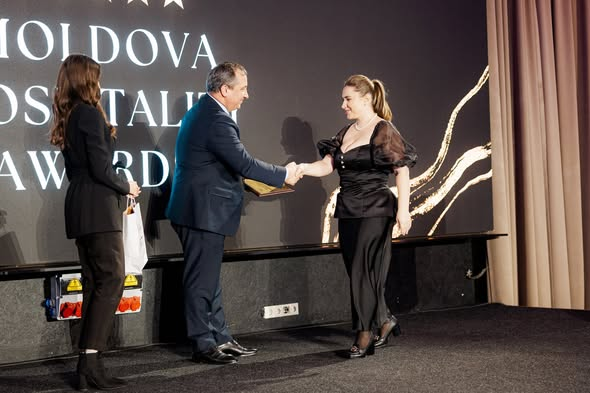
During the Forum, the programme winners received financial support certificates for the implementation of the selected projects, marking the transition from the selection stage to the implementation of initiatives that will contribute to the development of local tourism destinations and products.
From dialogue to implementation
Moldova Tourism Forum 2026 confirmed that tourism development can no longer be addressed separately through promotion, infrastructure, products or financing. For the Republic of Moldova to fully capitalize on its potential, these components must be developed as part of the same ecosystem.
International connectivity must bring tourists. Digital promotion must lead to bookable products. Artificial intelligence and data must help visitors and the industry make better decisions. Financing must enable businesses and communities to transform demand into competitive tourism experiences.
By bringing together more than 300 participants and 24 speakers, Moldova Tourism Forum 2026 created a platform for moving from discussions about the tourism potential of the Republic of Moldova toward concrete instruments and partnerships for turning that potential into reality.
The Forum was organized by the Public Institution “National Tourism Office”, with the support of the Ministry of Economic Development and Digitalization.
About the National Tourism Office
The Public Institution “National Tourism Office” is the public institution responsible for tourism development and promotion in the Republic of Moldova. Its mission is to contribute to transforming the Republic of Moldova into an attractive, sustainable and competitive tourism destination, recognized both nationally and internationally.